A Noter !

Un article du Normandy Advertiser


Caen school leads the way with digital teaching

By Alice Cannet on December 1, 2010


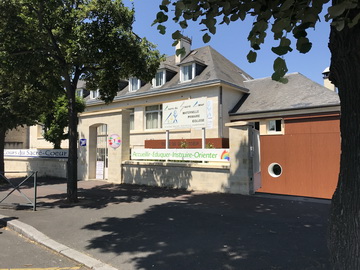
TBIA school in Caen is hoping to lead a revolution in French teaching methods by installing new inter-active, digital whiteboards from the UK in each of its 22 classrooms.

Teachers at the Sacré Coeur school say the response from pupils has been very positive, after the school installed the new technology for this year’s rentrée in September. Each of the school’s 450 pupils, from nursery to secondary, benefits from the initiative.

Sacré Coeur headteacher François Agasse said the new technology aimed to improve pupils’ learning and listening, and facilitate teaching through interactive features such as the internet and video.

He told The Advertiser: “There are some big advantages as far as time is concerned. The other main goal was to reduce the weight of school bags, especially for the youngest in 6ème and 5ème [the first two years of secondary school].

“It really is a superb tool. With the teachers, we have evaluated the situation and this first approach, and it was entirely positive. It has proved a very practical way of getting students’ attention.

“It also makes teachers a lot more available, since the lesson is displayed on the board. Instead of standing by the board writing, they can be in the rows checking spelling or helping pupils get organised – so it is really another way to teach and in this sense it is very interesting.”

These new whiteboards, Tableaux Numériques Intéractifs (TNI), are electronic boards linked to a computer and a multimedia server. Lessons are shown on the board using a video projector and there is also access to the internet and the possibility to use pictures, sound and video.

The system uses special software and the boards are produced by Promethean, a British company and Europe’s only manufacturer.

Mr Agasse said: “The board can also be used traditionally and be written on with a special stylus. We also have cameras that allow us to project anything we wish: material from students’ exercise books, objects… it can even be plugged into a microscope in the science labs.

“Another important thing is that, with a chalk board, once a lesson is done, you cannot go back to it, whereas here, during the same
lesson, you can go backwards.”

Sacré Coeur teachers had to receive special training to use the boards, but they welcomed the new tool with enthusiasm. As far as pupils were concerned, it was love at first sight.

“Pupils adopted the new system instantly. They are attentive to what teachers do and they have a perfect command of the tool,” Mr Agasse added. “We have equipped all the classrooms, but we now need to equip another one or two rooms for temporary classes. Now that we have started, we cannot go back. Even the Latin teachers need their digital boards.”

The school is now experimenting with a new digital after-school club, where children can follow catch-up classes or stay to do their homework. The new classe numérique should be ready for September 2011.

Experiment should be first of many

The work carried out by the Sacré Coeur in Caen will help local education authorities assess how to introduce digital teaching technology in other schools around the country.

The French government says it wants every school in France to be equipped with high-speed internet and digital teaching equipment in the coming years.

The education ministry commissioned a report earlier this year that found France was a long way behind the rest of its European neighbours, including the UK, for classroom technology. It came 24th out of 27th countries.

The study by UMP politician Jean-Michel Fourgous found that six per cent of schools use interactive whiteboards, compared with 78 per cent in the UK, and 75 per cent have internet access, compared with 94 per cent in the UK and 98 per cent in Denmark.

The research – based on interviews with 12,000 teachers, pupils, parents and unions – also found that French schools had an average of eight computers for every 100 pupils, compared with 17 in the UK.

Mr Fourgous wants 6,000 teachers to be the first to be trained on how to make better use of technology in lessons. These “digital ambassadors” will then share their knowledge with colleagues.

One key area for improvement is language teaching. The report recommends the widespread use of podcasts as a homework device for children learning spoken language skills.

Education minister Luc Chatel said the findings would be taken on board. He promised a “very ambitious” long-term plan to get more technology in classrooms and give better training to teachers, but full details have yet to be announced.


----------------------------------------------------------------------------------
Copyright 2010 - Cours du Sacré-Coeur - Caen - Tous droits réservés
Responsables de la publication F. Agasse - E. Bréard